Conflict: Middle East
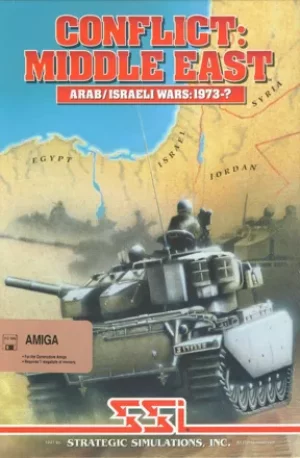

Conflict: Middle East
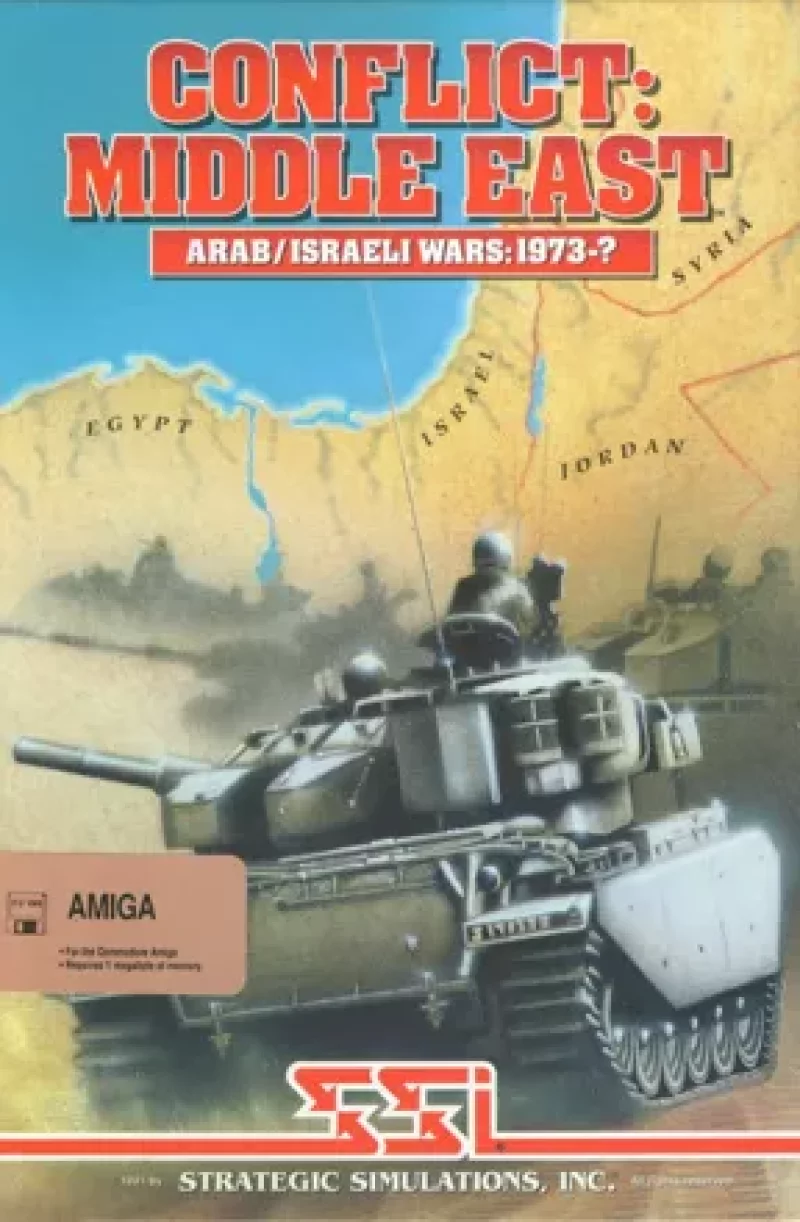
Conflict: Middle East
Conflict: Middle East
Game details
Category: Strategy
Developer: Strategic Simulations, Inc.
Publisher: Strategic Simulations, Inc.
Platform: Amiga
Release date: 1991
Uploaded by: AmiByte

Your rating

POOR
GREAT
Description
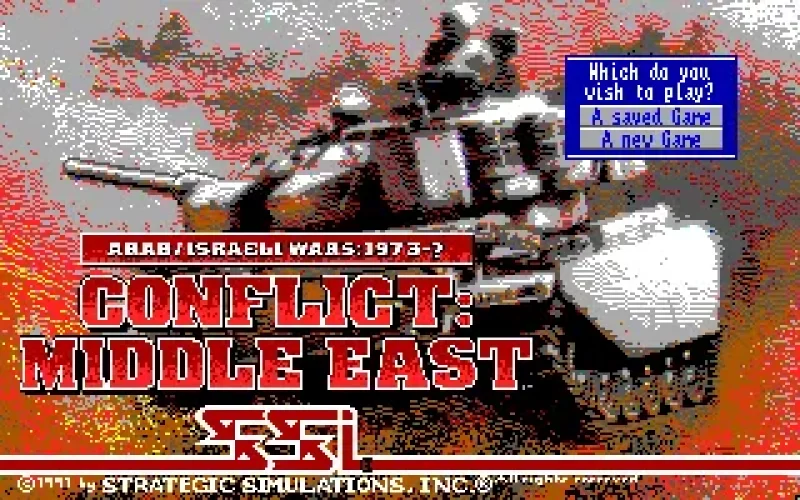
Oh, the 90s, the golden era of gaming when pixels were large, and imaginations were even larger! Enter "Conflict: Middle East," a title that graced the Amiga in 1991, clearly crafted by a bunch of genius strategists with a penchant for political intrigue and, perhaps, a mild caffeine addiction. Much like every game from that era, it had its quirks, but also its undeniable charm.
Let me start by saying that "Conflict: Middle East" is not a game you slide into with the casualness of a weekend soccer match. No, sir! Prepare yourself to channel your inner diplomat or, failing that, your inner armchair general. This game throws you right into one of the most volatile regions on Earth, with all the finesse of a catapult. You play as the Israeli Prime Minister – yep, this isn't your average jump-and-shoot kind of game.
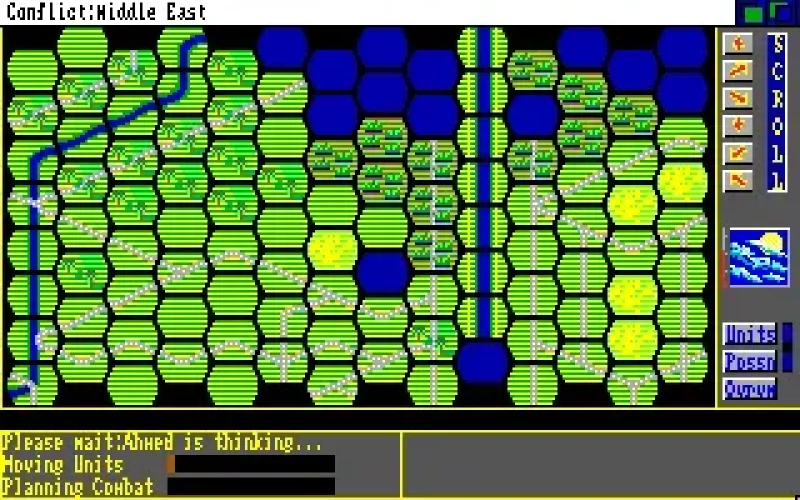
Visually? Let's just say it's no Picasso. The Amiga did what it could, and while the graphics might seem crude by today’s standards, they’re nostalgically charming. The top-down map feels like something you might find in an atlas that’s been in your grandma’s attic since, well, about 1991. But hold your judgment – it's the gameplay that holds the gem!
The game’s essence lies in its strategic depth. You must manage resources, troops, and international relations, all while navigating the intricate web of Middle Eastern politics. One wrong move, and you might find yourself in an all-out war, or worse, with your funding cut off. It's a bit like trying to play chess while juggling flaming torches – thrilling, nerve-racking, and you’re likely to singe your eyebrows a few times.
Sound-wise, well, let’s be honest. If you’re seeking a symphonic masterpiece, you might want to bring your own boombox and play something thematic in the background. What it does offer is some pretty serviceable effects that remind you that, yes, indeed, you are at the helm of a nation in a turbulent region. Sometimes it's the absence of sound that adds to the tension, like a silent movie with far more at stake than a falling piano.
But let’s talk about the real star here: the decision-making. As you issue commands and negotiate deals, you’ll soon realize this game is like a crash course in political strategy, with a side of hair-pulling suspense. It's a testament to its depth that despite the seemingly evergreen frustrations – like the occasional stubborn UI – you can't help but feel a twinge of satisfaction (or dread) at every decision's ripple effects.
Balancing humor with serious undertones, “Conflict: Middle East” ensures you're as entertained as you are mentally engaged. Sure, the learning curve is steep, and you'll probably restart a dozen times, but once you get into it, you’ll find it hard not to be absorbed by its world. It’s a game that demands patience and persistence, rewarding those who embrace its complexity with an experience that’s equal parts education and entertainment.
Ultimately, if you're in the mood for a game night with a slice of history and a dash of diplomacy, “Conflict: Middle East” is a pixelated relic that deserves your attention. It will make you love your victories, learn from your defeats, and, most importantly, appreciate the delicate art of geopolitical maneuvering – all from the comfort of your living room.
Leave a Reply
Related games