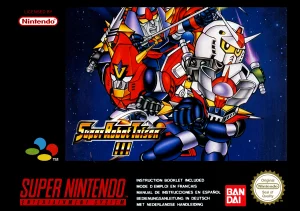
Dai-3-ji Super Robot Taisen

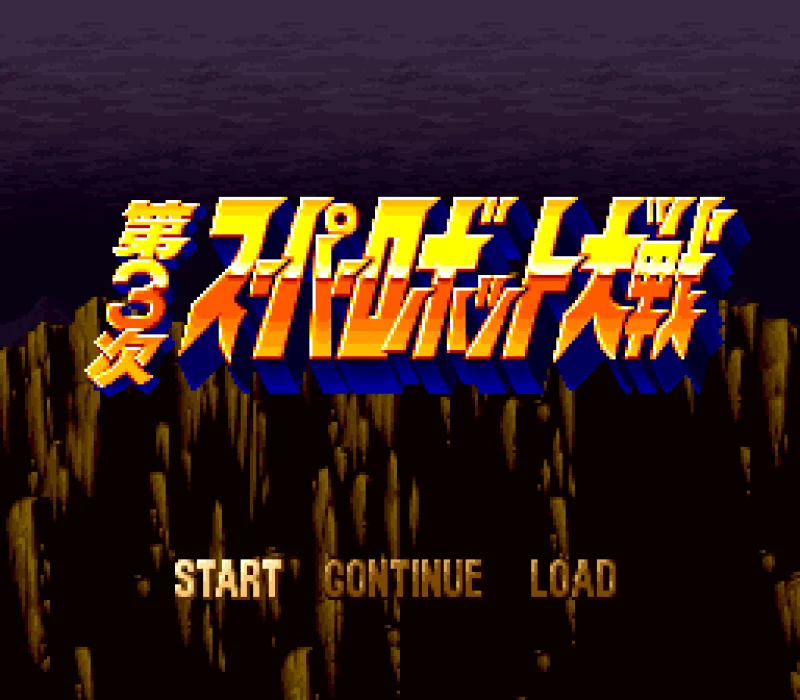


Dai-3-ji Super Robot Taisen
Dai-3-ji Super Robot Taisen
Dai-3-ji Super Robot Taisen
Dai-3-ji Super Robot Taisen
Game details
Category: RPG
Developer: Winky Soft Co., Ltd.
Publisher: Banpresto Co., Ltd.
Platform: SNES
Release date: 1993
Uploaded by: Laruan

Your rating

POOR
GREAT
Description
The third instalment of the Super Robot Taisen series is the first game to be released for the Super Famicom console. It is also a sequel to the game that came before it. Six months after the war against the Divine Crusaders, the heroes that defeated them are called back into action. At this point, they are organised into the Londo Bell special forces unit. The Zabi family's command has allowed the surviving members of the DC to regain their former power. In addition, unexplained disappearances close to lunar colonies point to the possibility that there is another group involved in this conflict. Londo Bell has been given the responsibility of investigating and fighting in the upcoming Super Robot War.
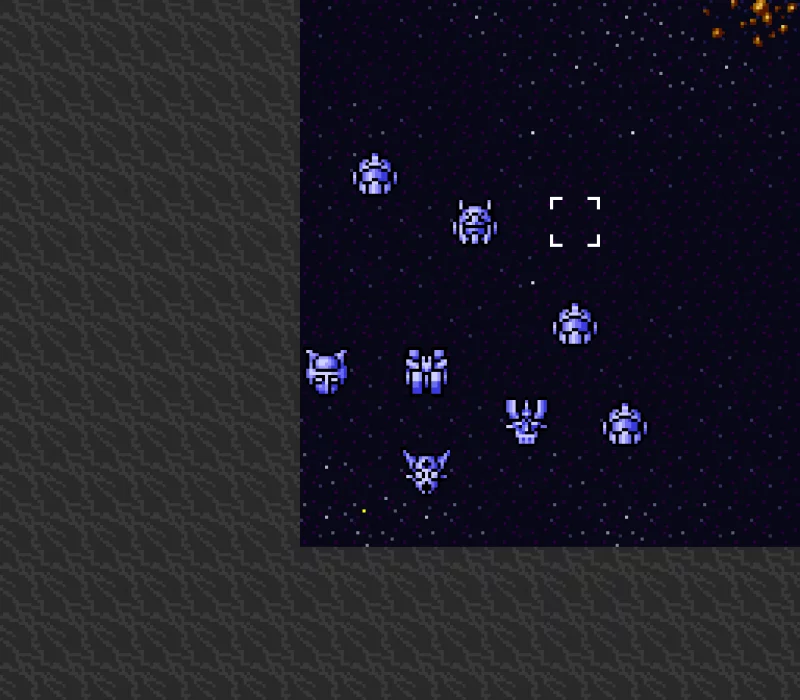
The game is, much like its predecessor, a turn-based strategy game with heavy RPG elements. It incorporates characters and robots from a variety of animated television series and places them in an all-new story. The game includes 58 missions, which is more than twice as many as SRW2 had, and it also introduces a branching mission path to the series for the first time. The path that a player takes through the game is determined not only by their performance in missions but also by the choices they make during and after those missions (i.e. number of turns required to complete the level). The decisions that are made also lead to one of three distinct possible conclusions.
The fundamental gameplay of the series has been carried over from the game that came before it. Players continue to direct their characters' movements and attacks on a map of the environment using context-sensitive menus, and battles are depicted as animated scenes. The spirit command, which allows the player to unleash special powers, and the negotiate command, which allows the player to make enemy units defect, both make a return as well.
Despite this, there has been an increase in the strategic complexity. Because pilots and their robots are now considered to be distinct entities, each possessing their own set of statistics, it is now possible for pilots to switch robots between missions, but this is restricted to taking place only within their own franchise (i.e. Amuro Ray can control all Gundam, but no Mazinger robots). Another one of the brand new features is the capability to select one of four different global counterattack strategies, ranging from aggressive (always counterattack) to conservative (only if the counterattack can't destroy the unit or if it has more than 50% HP) to defensive (never counterattack).
Ratings are assigned to the pilots based on their performance in six categories: attack power, probability to hit, piloting skill (which determines damage potential and chance of critical attacks), response (which determines chance of evading attacks), willpower (which is required for special attacks), and intuition (a static overall bonus). Leveling up, which is accomplished by gaining experience points in battle, leads to an automatic increase in a character's stats. The robots are ranked according to their hit points, energy, range, armour, and maximum response (which limits the pilot's respective stat). Every statistic, with the exception of range, can be levelled up between levels by spending money, which, like experience points, is earned by vanquishing foes. In addition to this, both the pilot and the robot are evaluated based on how well they can adjust to the various types of terrain. Each robot comes equipped with a selection of one-of-a-kind weapons, each of which also has its own set of statistics, including attack power, range, hit probability, and the amount of ammo or energy it consumes. Energy is constantly regenerating, whereas ammo can only be refilled once a mission has been completed, just like spirit points.
In addition to adding some new robots and characters from known franchises, such as Gundam's War in the Pocket and Stardust Memory, the game introduces franchises from outside the Gundam/Mazinger/Getter Robo trinity for the very first time. Raideen, Combattler V, and Daitarn 3 all make their first appearance in the series.
Leave a Reply
Related games
Cyber Knight II: Chikyū Teikoku no Yabō
by Atelier Double Co. Ltd., 1994